Brazilian Home Living Brazil: Designing Comfort Amid Change
Updated: April 9, 2026
Transform Your Workspace: Effective Storage and Organization Tips for Your Office
In today’s fast-paced work environment, maintaining a well-organized office space is crucial for productivity and mental clarity. A cluttered workspace can lead to increased stress levels and decreased efficiency, while a neat and orderly environment can foster creativity and focus. This comprehensive guide will walk you through effective storage and organization tips to transform your workspace into a haven of productivity.
Understanding the Importance of Office Organization
Before diving into specific tips and strategies, it’s essential to understand why office organization matters. A well-organized office can lead to:
- Increased Productivity: An orderly space minimizes distractions, allowing you to concentrate better on tasks.
- Reduced Stress: Knowing where everything is eliminates the anxiety of last-minute scrambles to find important documents or tools.
- Improved Creativity: A clean workspace provides the mental clarity needed for creative thinking and problem-solving.
- Professional Image: A tidy office reflects professionalism and competence to clients and colleagues.
Assessing Your Current Office Setup
Before implementing changes, assess your current office setup. Identify areas where clutter accumulates and note any storage deficits. Consider how you use your space and what items are essential for daily operations. This evaluation will help you tailor solutions to your specific needs.
Decluttering: The First Step to Organization

Decluttering is the foundation of any successful organization effort. Follow these steps to effectively declutter your office:
- Sort and Categorize: Go through all items in your office and categorize them into groups such as “keep,” “discard,” and “donate.”
- Purge Unnecessary Items: Be ruthless in your decluttering. If an item hasn’t been used in the past year, it’s likely not essential.
- Digitize Paperwork: Minimize physical paperwork by digitizing important documents and storing them in the cloud.
Implementing Effective Storage Solutions
Once you’ve decluttered, it’s time to implement storage solutions that cater to your specific needs. Here are some ideas:
Vertical Storage
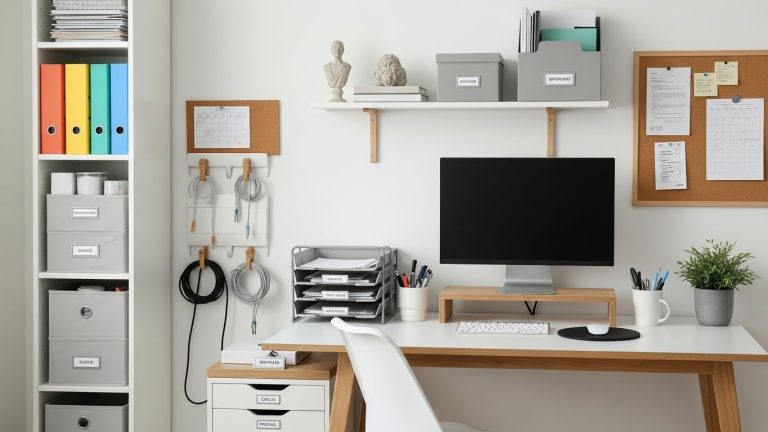
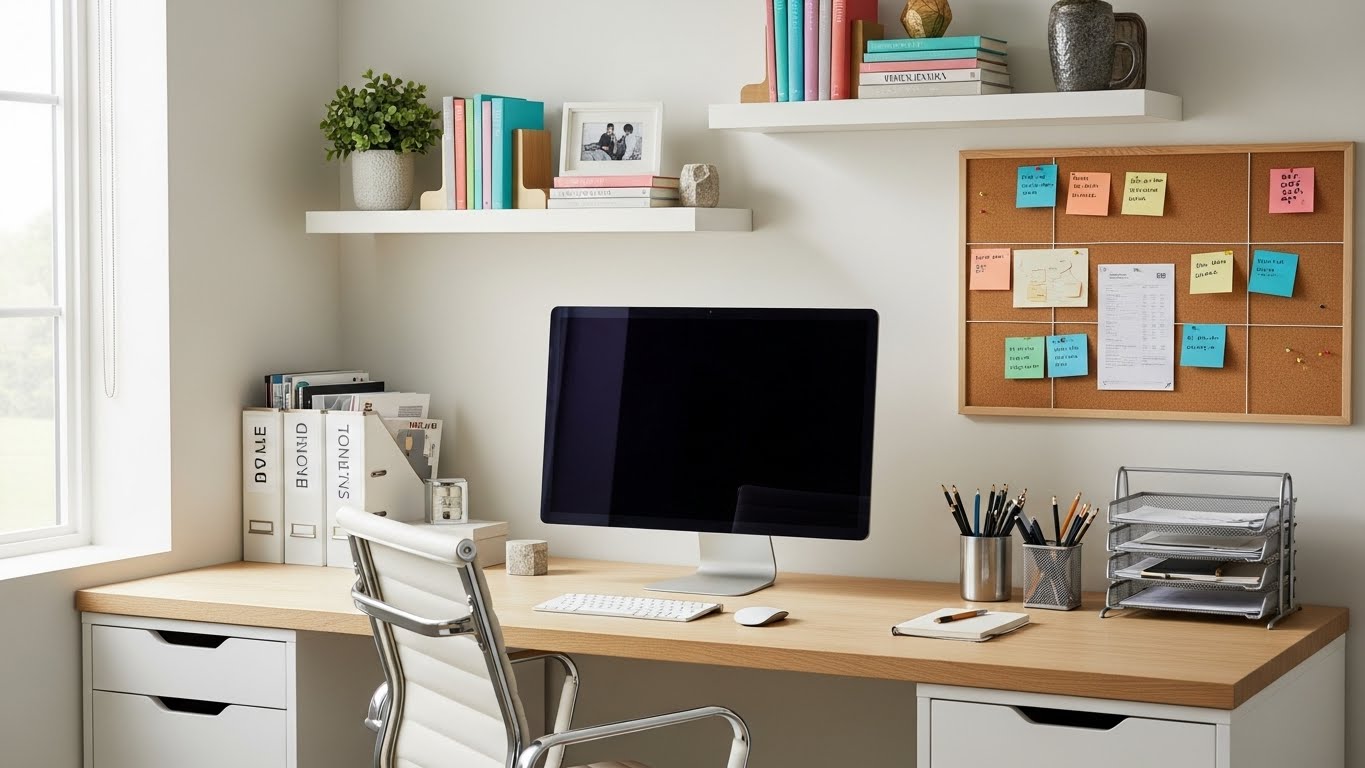
Take advantage of vertical space by installing shelves or pegboards. These can hold books, decorative items, or office supplies, freeing up valuable desk space. Utilize creative storage solutions to maximize efficiency.
Drawer Organizers
Invest in adjustable drawer organizers to keep small items like pens, paper clips, and sticky notes in order. This ensures everything has a designated place, reducing clutter.
Labeling Systems
Use a labeling system to categorize items in your office. This could include labels on drawers, shelves, and storage boxes. Labeling helps in quickly locating items and maintaining organization over time.
Multi-Functional Furniture
Consider furniture pieces that offer storage, such as desks with built-in drawers or filing cabinets. These can reduce the need for additional storage units, streamlining your workspace.
Optimizing Your Desk Layout
Your desk is the heart of your workspace, and its organization can significantly impact productivity. Follow these tips to optimize your desk layout:
Minimalist Approach
Embrace a minimalist approach by keeping only essential items on your desk. This may include your computer, notepad, and a few pens. Store other items away to maintain a clean surface.
Cable Management
Messy cables can quickly make a desk look cluttered. Use cable organizers or clips to keep cords tidy and out of sight. This not only improves aesthetics but also reduces the risk of tripping or tangling.
Monitor Placement
Position your monitor at eye level and approximately an arm’s length away to prevent neck and eye strain. Consider using a monitor stand or a wall mount for ergonomic benefits.
Maintaining Your Organized Space
An organized office requires consistent effort to maintain. Implement these practices to sustain your newly organized space:
- Daily Tidying: Spend a few minutes at the end of each day tidying up your desk and returning items to their designated spots.
- Weekly Reviews: Set aside time each week to assess your office organization and make any necessary adjustments.
- Seasonal Declutters: Conduct a thorough declutter every season to prevent accumulation of unnecessary items.
Personalizing Your Workspace
While organization is key, personalizing your workspace can enhance comfort and creativity. Consider adding personal touches such as:
- Decorative Items: Include a few decorative items like plants, artwork, or family photos to make the space feel inviting.
- Color Scheme: Choose a color scheme that resonates with you, using accessories like desk mats or storage boxes to add visual interest.
Leveraging Technology for Enhanced Organization
Technology can play a significant role in maintaining an organized office. Explore tools and apps designed to streamline your workflow:
- Task Management Apps: Use apps like Todoist or Trello to keep track of tasks and deadlines, reducing the need for physical planners.
- Cloud Storage: Store important documents and files in cloud storage solutions like Dropbox or Google Drive for easy access and reduced paper clutter.
Takeaways
Transforming your workspace with effective storage and organization solutions can dramatically improve your productivity, reduce stress, and enhance your professional image. By assessing your current setup, implementing strategic storage solutions, and maintaining your organized space, you can create an office environment that supports your work and inspires creativity. Remember, the key to sustaining an organized workspace is consistency and personalization, ensuring that your office not only functions well but also feels like a place you enjoy spending time in.
Adapting to Changing Needs
As your work life evolves, so too should your office space. Whether you’re taking on new projects, expanding your business, or simply finding new tools, your organizational system should be flexible enough to adapt to these changes. Here are some strategies to ensure your office remains functional and efficient over time:
Regular Assessments
Periodically assess your office setup to determine if it still meets your current needs. This could involve changing the layout, updating storage solutions, or introducing new organizational tools. A quarterly review can help you stay on top of your workspace requirements.
Modular Storage Solutions
Consider investing in modular storage solutions that can be easily reconfigured as your needs change. This might include shelving units with adjustable shelves or stackable storage boxes that can be rearranged. The flexibility of modular systems ensures you can easily adapt your storage to accommodate new items or changes in workflow.
Open to New Tools and Techniques
The world of work is constantly evolving, and so are the tools that help us stay organized. Stay informed about new organizational tools and techniques that can enhance your office efficiency. For instance, explore the latest in note-taking apps or project management software that can streamline your tasks and keep your office clutter-free.
Encouraging a Culture of Organization
If you share your workspace with others, encouraging a culture of organization can significantly enhance the overall environment. Here are some ways to promote organization among your team:
Lead by Example
Demonstrate the benefits of a well-organized workspace by maintaining your own office area. This can inspire others to follow suit and adopt similar practices.
Provide Resources
Offer resources and training on effective organization techniques. This could involve workshops, sharing articles on organization, or even bringing in a professional organizer for a team session.
Set Office Standards
Develop clear standards for office organization that everyone can follow. This might include guidelines for desk layout, common area usage, or shared storage solutions. Clear standards ensure everyone is on the same page and contributes to a cohesive workspace.
Overcoming Common Challenges
Maintaining an organized office can come with challenges, but being prepared can help you overcome them. Here are some common hurdles and strategies to address them:
Procrastination
Sometimes the task of organizing can feel overwhelming, leading to procrastination. Break down the task into smaller, manageable steps and set aside dedicated time each week to tackle each one. Celebrate small victories to keep motivated.
Accumulation of Paperwork
Even in a digital age, paperwork can still pile up. Implement a regular schedule for scanning and digitizing documents. Additionally, set up a filing system that categorizes documents by priority or project to keep physical papers organized.
Shared Spaces
For those in shared office environments, keeping common areas tidy can be challenging. Establish clear guidelines for shared spaces and encourage everyone to contribute to maintaining cleanliness and order. Regularly scheduled clean-up days can also help keep shared areas organized.
Final Thoughts
Transforming your workspace into an organized and efficient environment is a powerful step towards enhancing productivity and reducing stress. By implementing the strategies outlined in this guide, you’ll be well-equipped to create a workspace that not only meets your current needs but is also adaptable to future changes. Remember, the key to successful organization lies in consistency, adaptability, and a willingness to embrace new tools and techniques. With these elements in place, your office can become a hub of productivity and creativity, reflecting your professional capabilities and personal style.